
Estimate
Duct Measure, from tape to order.
Fitters measure each part on site. The drawing draws itself from their numbers. The office approves, and the sheets go to the supplier as one order.
Measure it once
Type the numbers. Get the drawing.
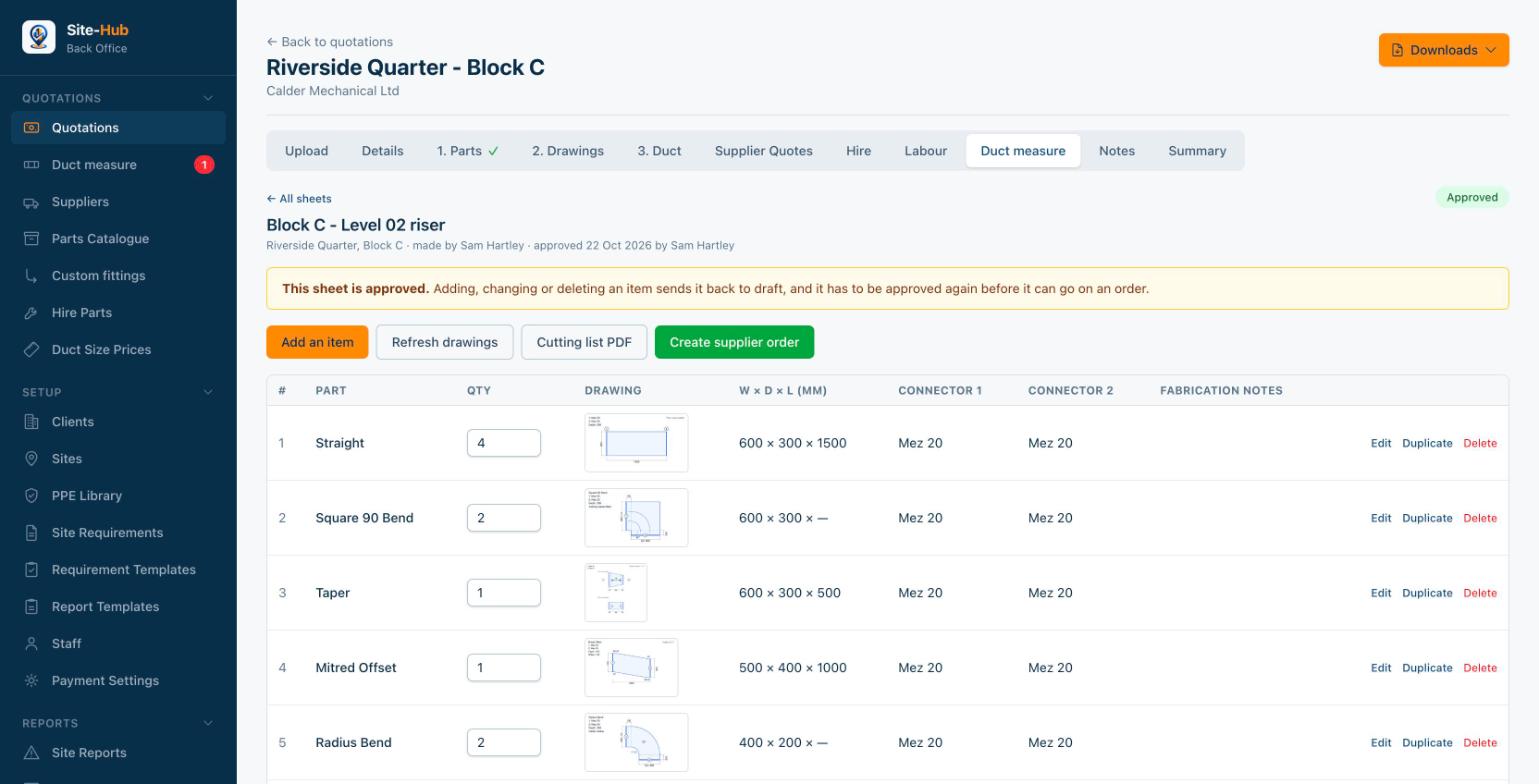
Pick the part, enter the sizes and Site-Hub draws it for you — a proper dimensioned picture of exactly what is being asked for, so nothing depends on a hand sketch being read the right way up.
The drawing is regenerated from the numbers, so correct a size and the picture follows.
The parts
The fittings a ductwork job actually uses.
Each part has its own drawn form, with the dimensions that matter to a fabricator, and an optional direction arrow where the way it sits is important.
- Straight lengths
- 90° and 45° bends
- Tapers, with a direction arrow
- Mitred offsets, both ways
- Flat shoes, plan and side
- Mesh transitions
- Connectors, from Mez 20 to Mez 40
- Custom parts, with notes
The office's side
Review, approve, and keep a clean record.
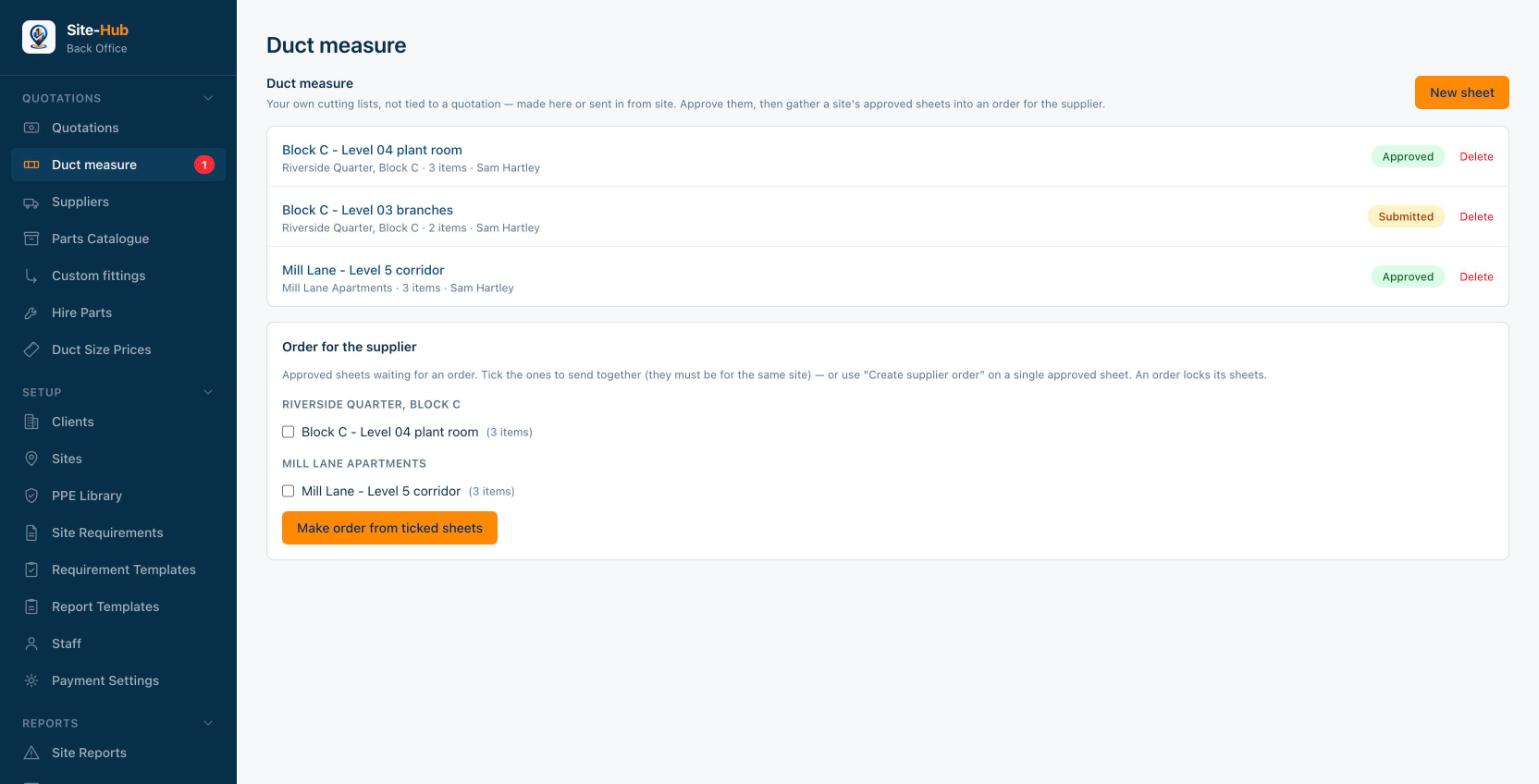
Every sheet from every site appears in one list, with a count of the ones waiting on you and the submitted ones at the top. Open a sheet, check it, add a note — "access door to be fitted" — and approve it.
An approved sheet is protected. Change it and it drops back to draft, so what was approved is always what gets ordered.
To the supplier
One order. One email.
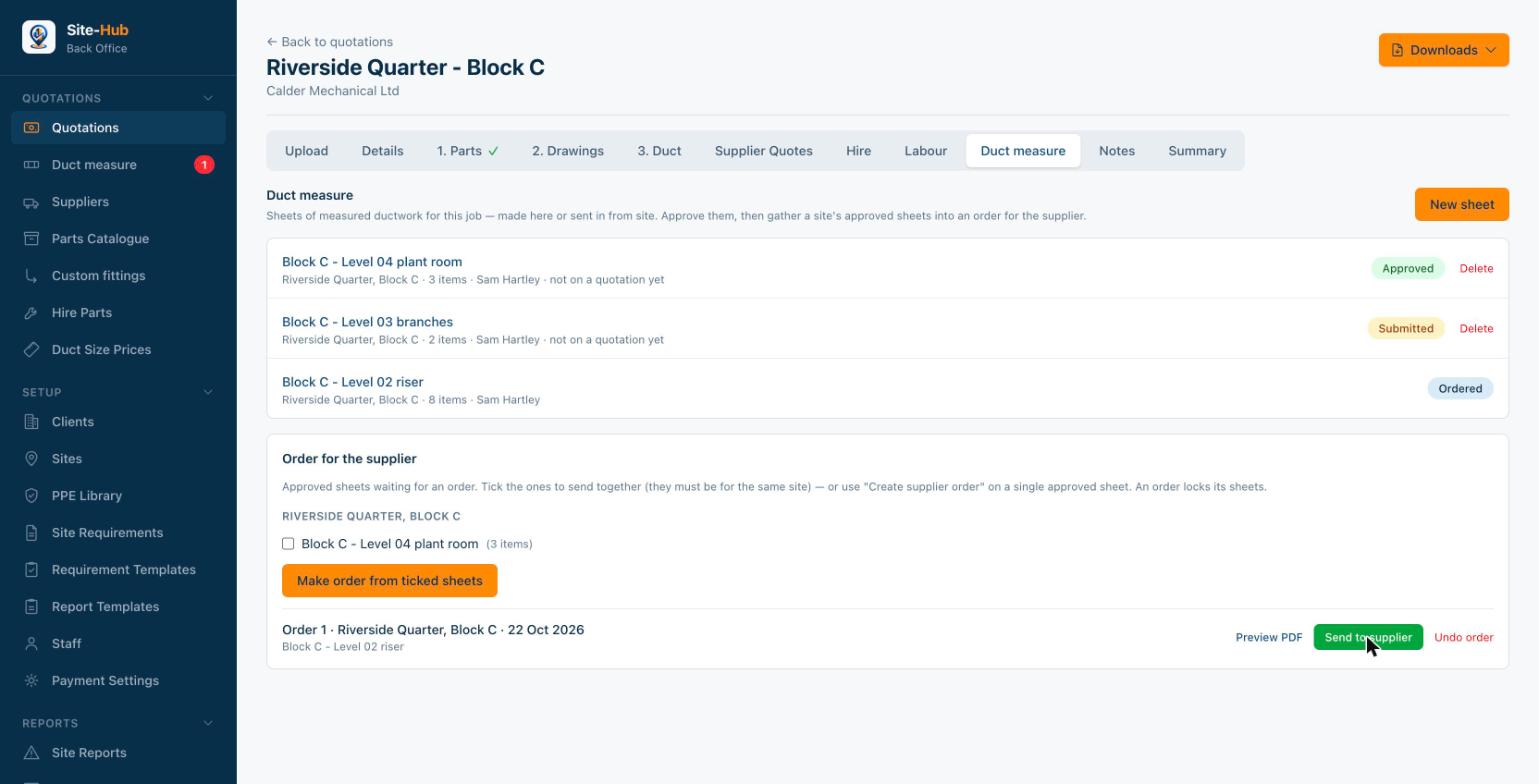
The approved sheets for a site are put together into a single order PDF — each sheet kept whole, no merging and no guessing. Pick the supplier, add a message if you want to, and send it from the system; you are copied in and replies come straight back to you.
Once ordered, a sheet is locked, so the order on file is always the one that was sent.
Joined to the quotation
Measured against the job it belongs to.
Sheets hang off the quotation they are for, so the measured ducting and the priced ducting are looked at together. A sheet a fitter started without a quotation can be put onto one later, from the list of quotations for its site.
See Quotations for how the cost is built up.
On the phone, the fitter taps any drawing to enlarge it, so what is on the sheet is what they can see at the bench.